Level 1
Yama Niyama
Babaji has ordained one Niyama for the Kriya Guru and four Yamas for the Shishya.
- Guru has to ensure Babaji is present in astral form during deeksha
- Shishya must give up smoking
- Shishya must give up alcohol
- Shishya must give up non-vegetarian food
- Shishya must not keep extra marital relationships
Note: The Shishya is required to take an oath not to indulge in smoking, drinking alcohol, eating non-vegetarian food (including eggs), or
engaging in extramarital relationships. If the Shishya violates any of these oaths, he will lose his deeksha.
Level 2
Pranayama
This is a special technique of throat breathing where we have to move only abdomen
for breathing.
Level 3
Chakra Cleansing
Chakras are the major energy centres of the body through which the concerned organs,
cells and tissues get energy. There are 114 chakras in our body. Out of these,
seven chakras are most important and are situated in the vertebral column.
- Muladhara chakra (Base)
- Swadhishthana chakra (Sex)
- Manipura chakra (Solar Plexus)
- Anahata chakra (Heart)
- Vishudhi chakra (Throat)
- Ajna chakra
- Sahasrara chakra
Each of these chakras is in the form of a wheel connected to a funnel. The narrow
opening of the funnel is connected to the center of the chakra. The wide opening of
the funnel faces away from the chakra. Both the openings have sieves.
1. Muladhara chakra (Base chakra)
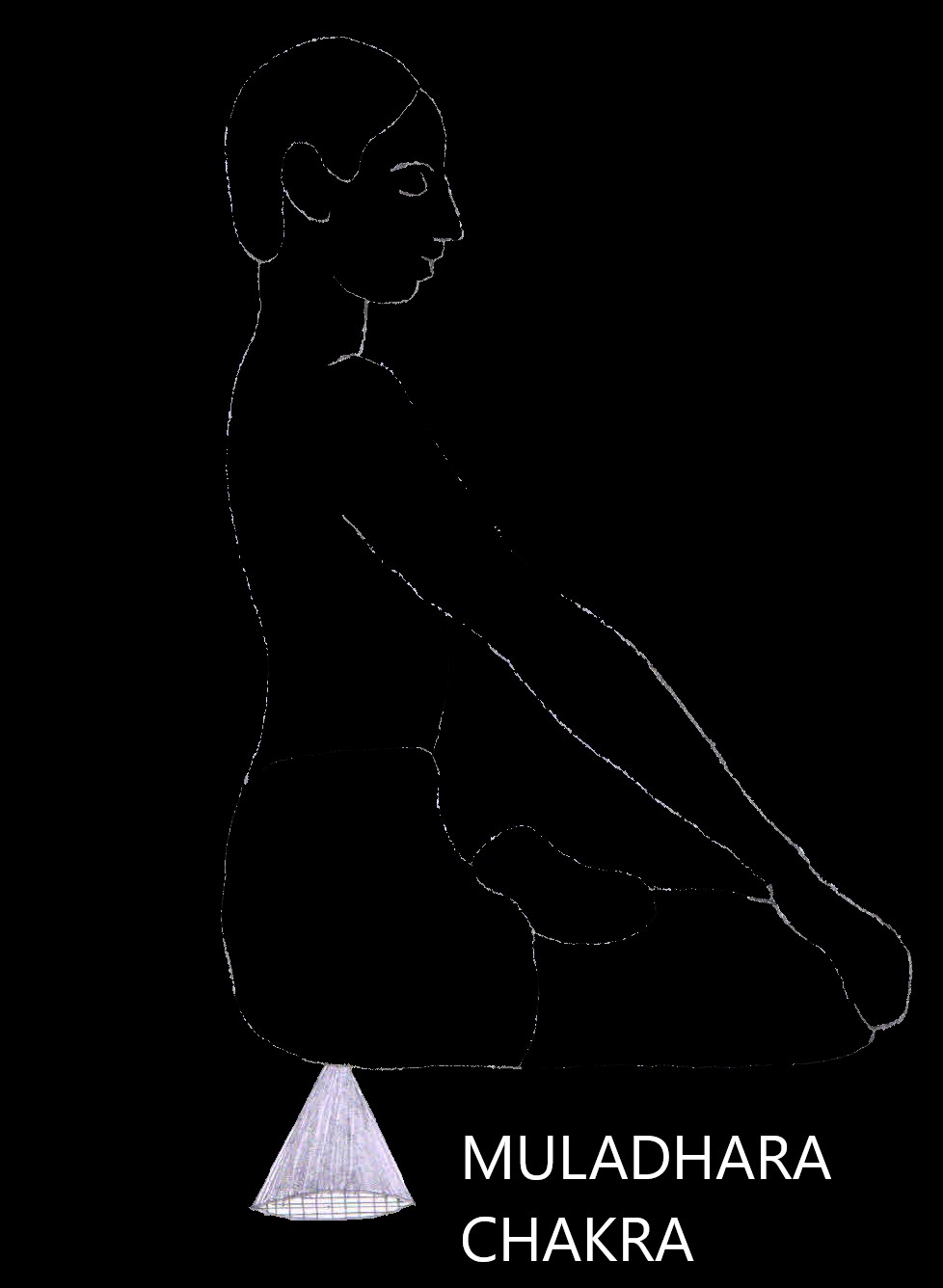
Muladhara is located between the anus and urethra in the perineum. The wide
opening of the funnel faces downwards towards earth pulling energy from the earth
in sitting posture. Narrow opening faces towards body.
2. Swadhishthana chakra (Sex chakra)
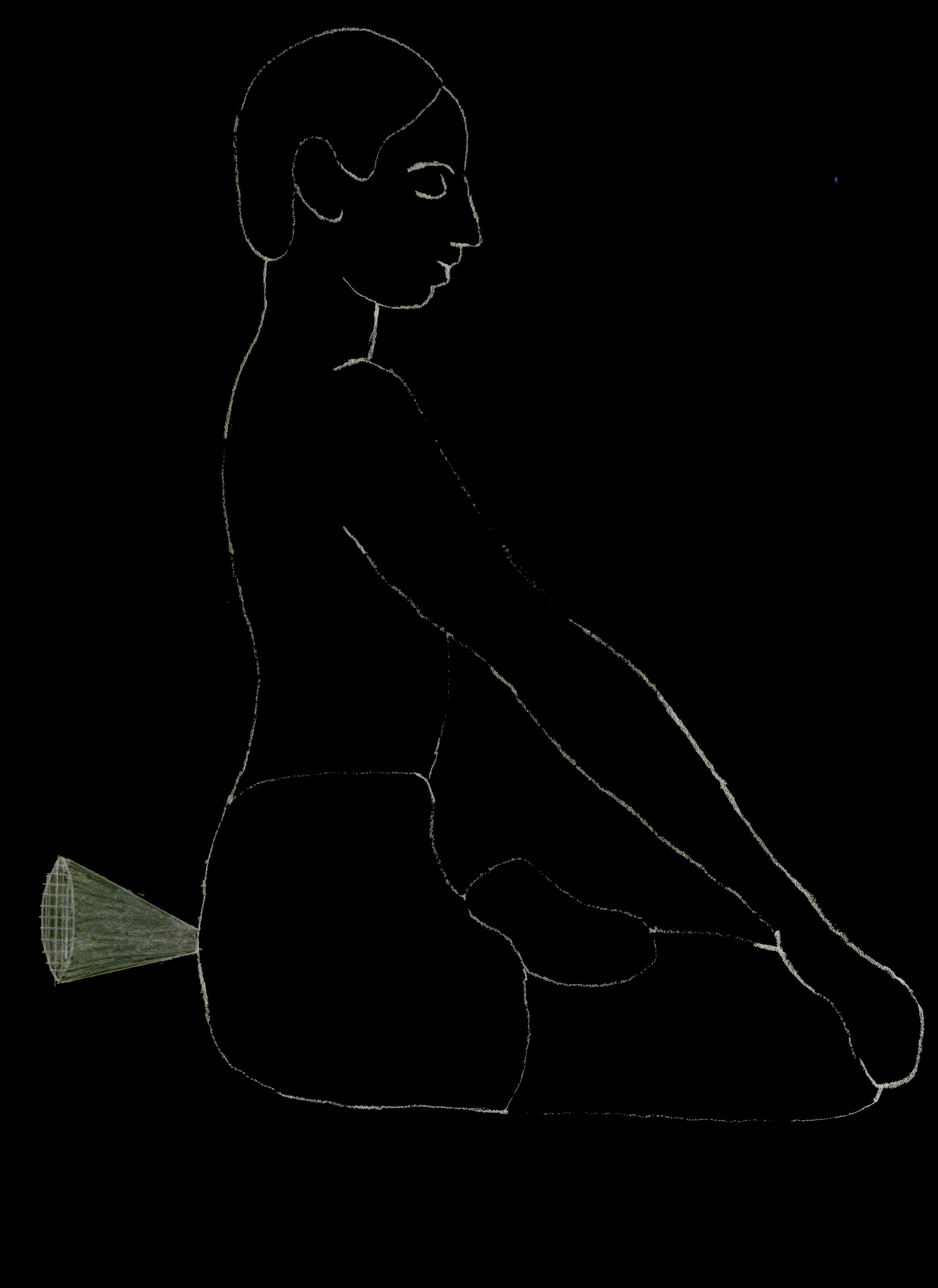
It is located behind the urethra in the spine. The wide opening of the funnel
faces backwards and outwards. Narrow opening faces towards spine.
3. Manipura chakra (Solar)
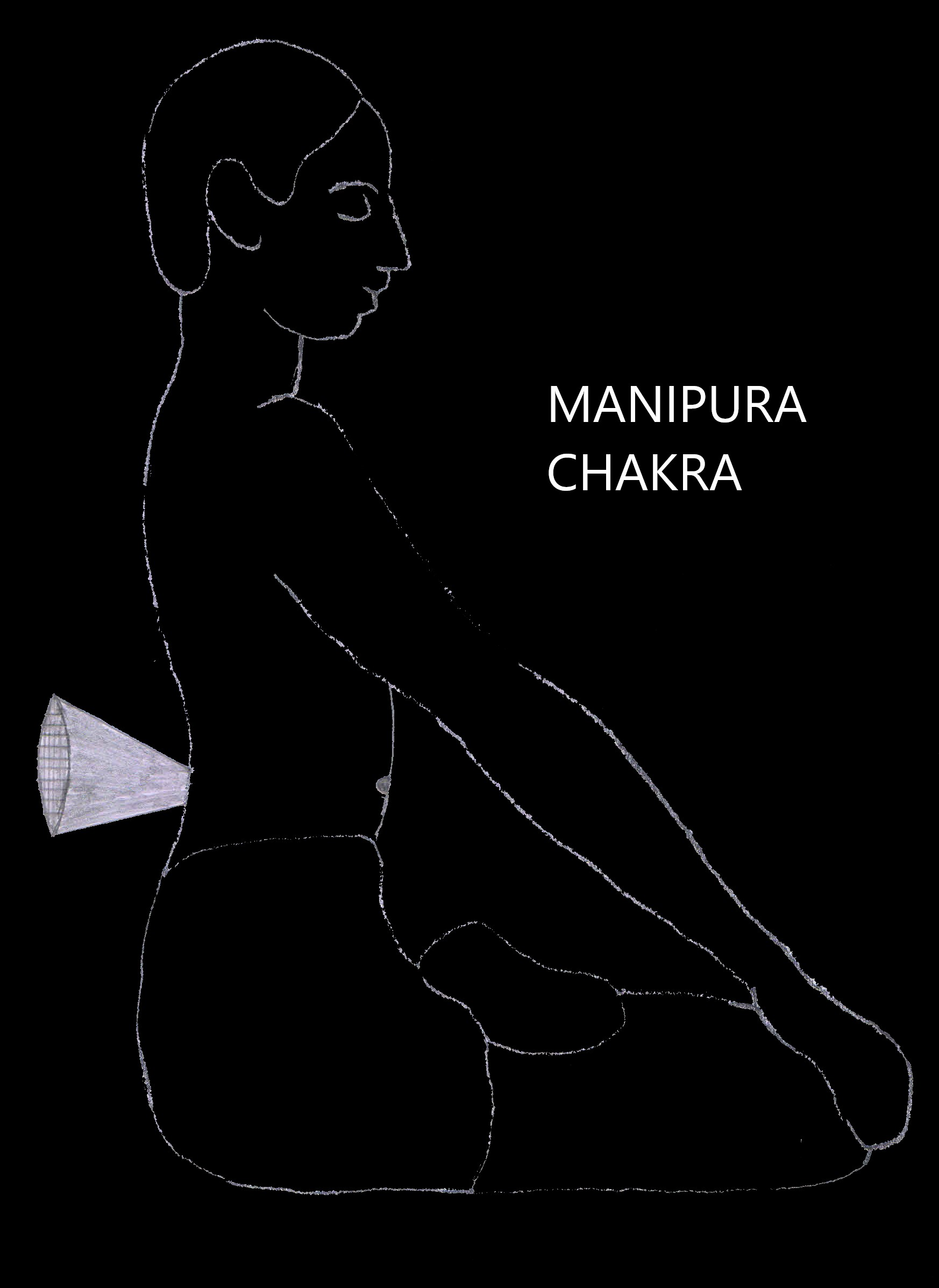
It is located at the level of umbilicus along the spine. The wide opening of the
funnel faces backwards and outwards. Narrow opening faces towards spine.
4. Anahata chakra (Heart chakra)
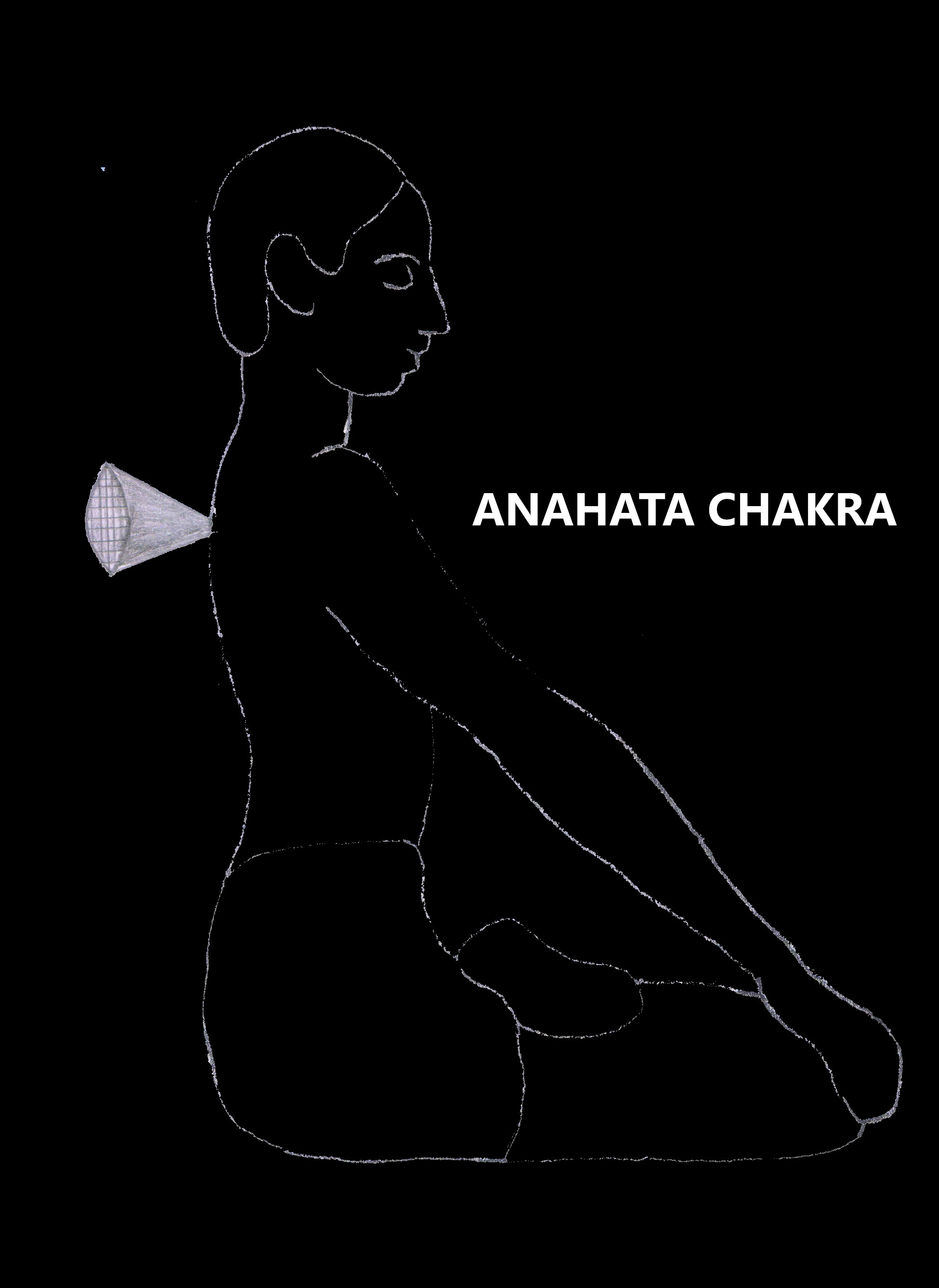
It can be located by passing the finger down from the top of sternum or sternal
notch. A projection is felt which is known as sternal ankle. Anahata chakra is
situated just behind the sternal ankle in the spine. The wide opening of the
funnel faces backwards and outwards. Narrow opening faces towards spine.
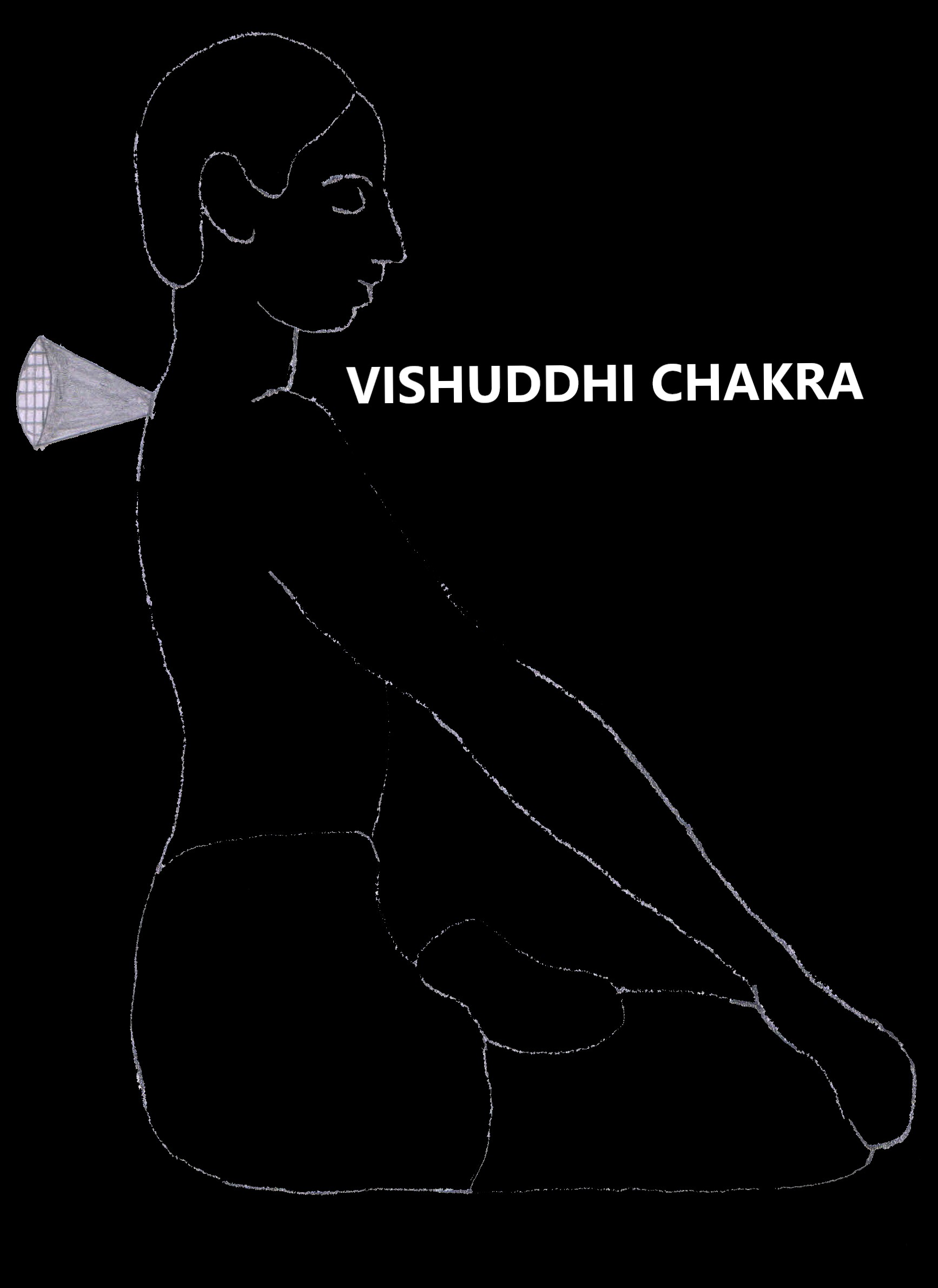
5. Vishudhi chakra (Throat chakra)
It is located at the sternal notch level in the spine. The wide opening of the
funnel faces backwards and outwards. Narrow opening faces towards spine.
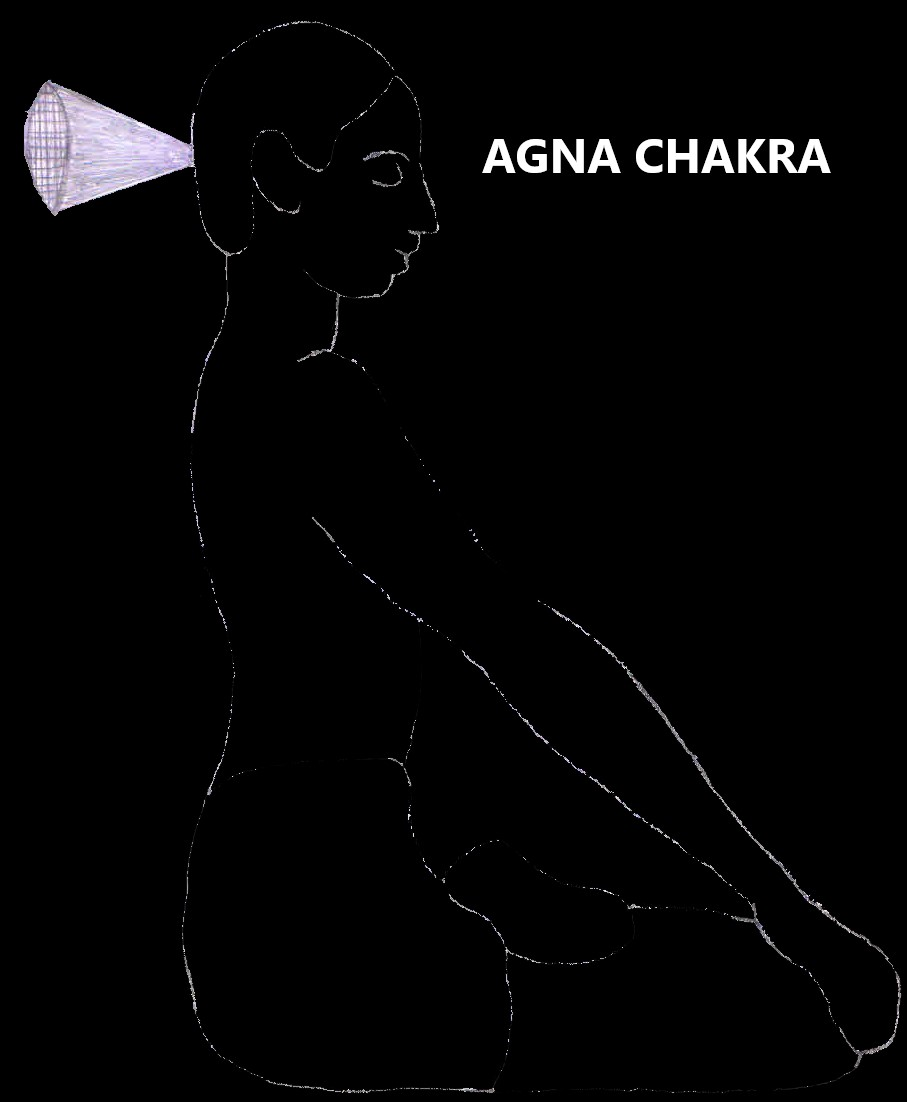
6. Ajna chakra
It is located at the back of scalp or head at the same level as the eyebrow
center. The wide opening faces outwards and backwards. During meditation Atma
concentration is done in between eyebrows.
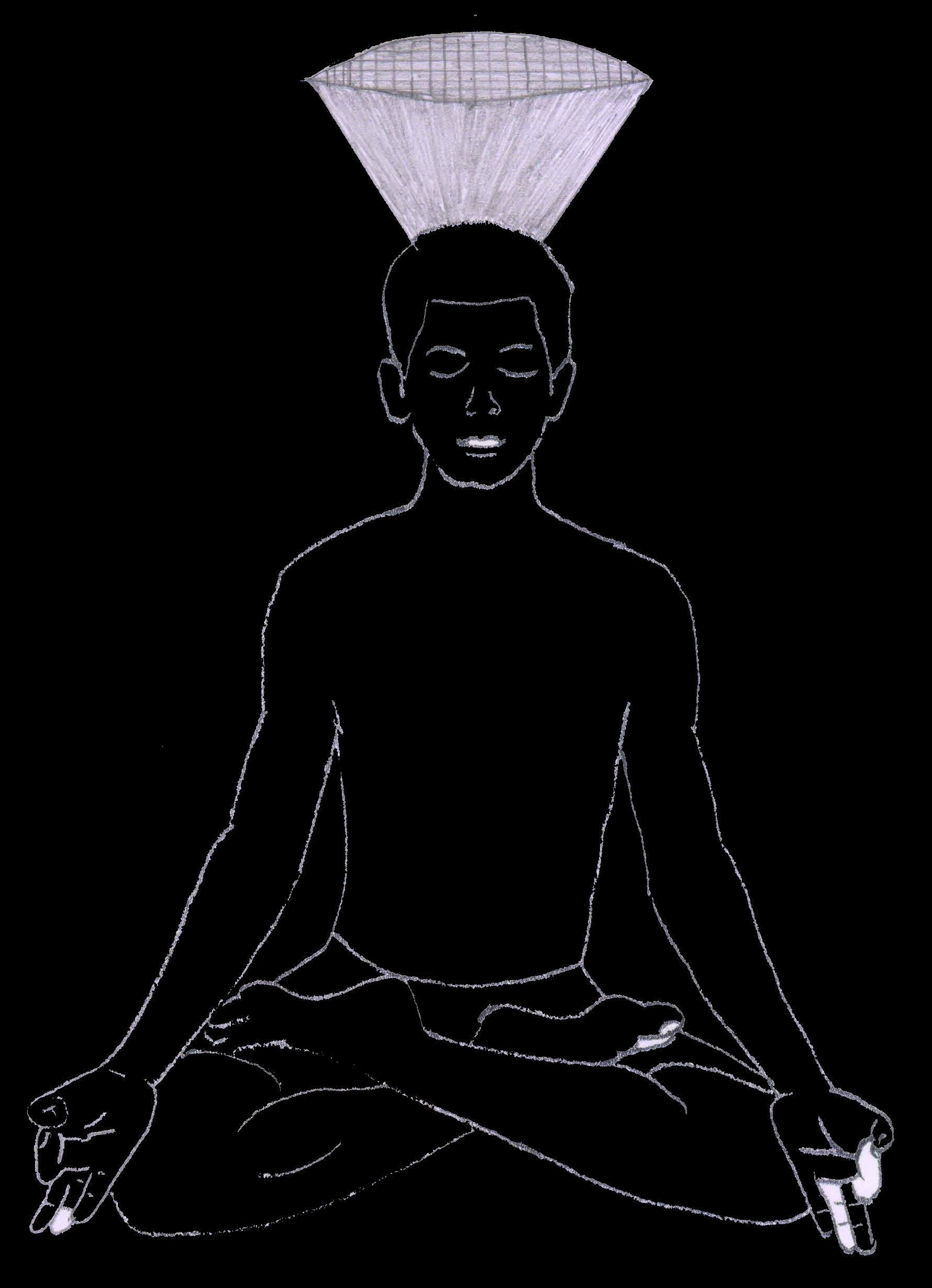
7. Sahasrara chakra
It is located over the top (crown) of head or scalp. The wide opening of the
funnel is facing upwards to receive the cosmic energy. During deep meditation, you
can feel the thousand petals opening from center to periphery upwards and
receiving cosmic energy.
In Kriyayoga, we have to clean all the chakras with pranayama or prana and get
energised before doing meditation.
Level 4
Nadi Cleansing
The human body has 72000 nadis. Out of these, three are very important. They are
Eda, Pingala and Sushumna.
Eda is the left side channel seen along the spine which connects the right side of
brain as it crosses. It is also called as Chandra nadi. If eda is more activated,
introverted nature and cold sensation in the body is seen.
Pingala nadi is situated over the right side of the spine and this is also called as
Surya nadi. It connects the left side of the brain as it crosses. It is associated
with extroversion and strength or vitality of the body. By the activation of pingala
nadi your body will become hot. If you are not able to tolerate heat, either your
eda nadi is blocked and must be cleared or you have to dip in river or flowing water
several times or pour water on your crown or top of head. If heat still persists, do
water dhara in Shiva temple.
Sushumna nadi is seen at the centre of the vertebral column. They all start from the
muladhara. Eda and Pingala nadi end at the Ajna. Sushumna nadi ends at the
Sahasrara. These three nadis must be cleaned regularly for the free flow of energy
to all the chakras as well as to whole body.
Level 5
Aathmaa Meditation
Once the chakras and nadis are cleaned then you have to close the eyes or with open
eyes pointing towards brumadhya (between eyebrows) and be in a state of atma
consciousness for 15 to 30 minutes. Whenever you sit for meditation, you must do
atma meditation as this is the base from which you can move to further stage of
meditation. If you are basically an irritated and reactive person, you can
concentrate on your heart initially and meditate.
Level 6
Kundalini Kriya
At this stage, guru will help to raise the kundalini in a guided meditation session.
If the kundalini is raised two or three times and brought back to normal position,
you have nothing to worry and can do it later all by yourself. If you do it alone and your mind
is not strong enough to command the kundalini power or you get frightened by kundalini power,
you may go to a state of madness. By sitting with the raised kundalini power,
you can be in a state of ecstasy for any amount of time. Once the meditation is over
yogis continue keeping kundalini in sahasrara whereas family people have to bring kundalini
back to normal position before getting up from meditation. Otherwise, they cannot mingle freely in society.
Level 7
Astral Travel
Once you appreciate the Atma and be in a state of Atma consciousness, the guru can guide you
to bring out the astral body for astral travel. During astral travel, the guru allows you
to travel through 14 lokas(7 up and 7 down) and finally reach the top layer which is
Brahma/Paramathma/Parabrahma/Higher Consciousness/Higher Cosmic State.
Level 8
Paramathma Realisation
Once we reach Parabrahma our physical body will get automatically connected with Parabrahma
and energy transfer takes place, once the energy transfer is complete the body becomes cool
and there after the astral body returns in a fraction of second in front of your physcial body.
Later we can command our astral body to merge into our physical body. For the first time this
process may take some time but later in a fraction of a second we can go and come back
anywhere in the universe.
Level 9
Aathmaa – Paramathma Meditation
Actual Kriya Yoga meditation starts from this stage onwards that is Atma - Paramatma - Kundalini consciousness.
At this stage you can experience a state of ecstasy or bliss.
Level 10
Aura Cleansing
Seven layers of Aura and the causal body will be cleansed with the help of pranayama.
Level 11
Aham Brahmasmi
In this state of meditation first we will become atma/soul conscious later expanding into
Paramathma/Parambrahma consciousness within our solar system(milky way).
Level 12
Aham Brahmand
Once we sit in Ahama Brahmasmi depending on the intensity of your meditation our consciousness
again expands through multiple galaxies and covers the entire universe/brahmand.
Level 13
Brahmarandhra Opening
Usually, the opening of the Brahmarandhra happens only just before samadhi. However, exceptional yogis can block the soul's
exit through the Brahmarandhra at will. Furthermore, yogis possess the rare ability to reinsert the soul back into the body.
The Brahmarandhra is located at anterior fontenal(soft spot in the front of scalp of new born babies).
Level 14
Jeeva/Maha Samadhi
In the state of samadhi yogi will sit for a long time in Atma - Paramathma - Kundalini consciousness
by leaving the body conciousness and being in a thoughless state. In maha samadhi the brahmarandhra
is open and the soul comes out through the brahmarandra at his own will and merges with the
Paramathma/Cosmic World/Higher consciousness/Parabrahma. Even if the soul merges with the higher
consciousness by jeeva samadhi an imprint of the soul can be seen at sukshma loka(4th layer) for great yogis.
Level 15
Merging of a soul after normal death
Advanced Kriya Yogis can merge purified souls to the higher consciousness/paramathma/parabrahma even
after a normal death. As of now April 2026, 7 souls of those who died a natural death have been merged by Sadguru Dr Siju
into the cosmic world. Guruji's father and mother, two students, parents of two students and
a soul brought by Ramana Maharshi in trance.